
Hello, this is Respect Plastic Surgery!
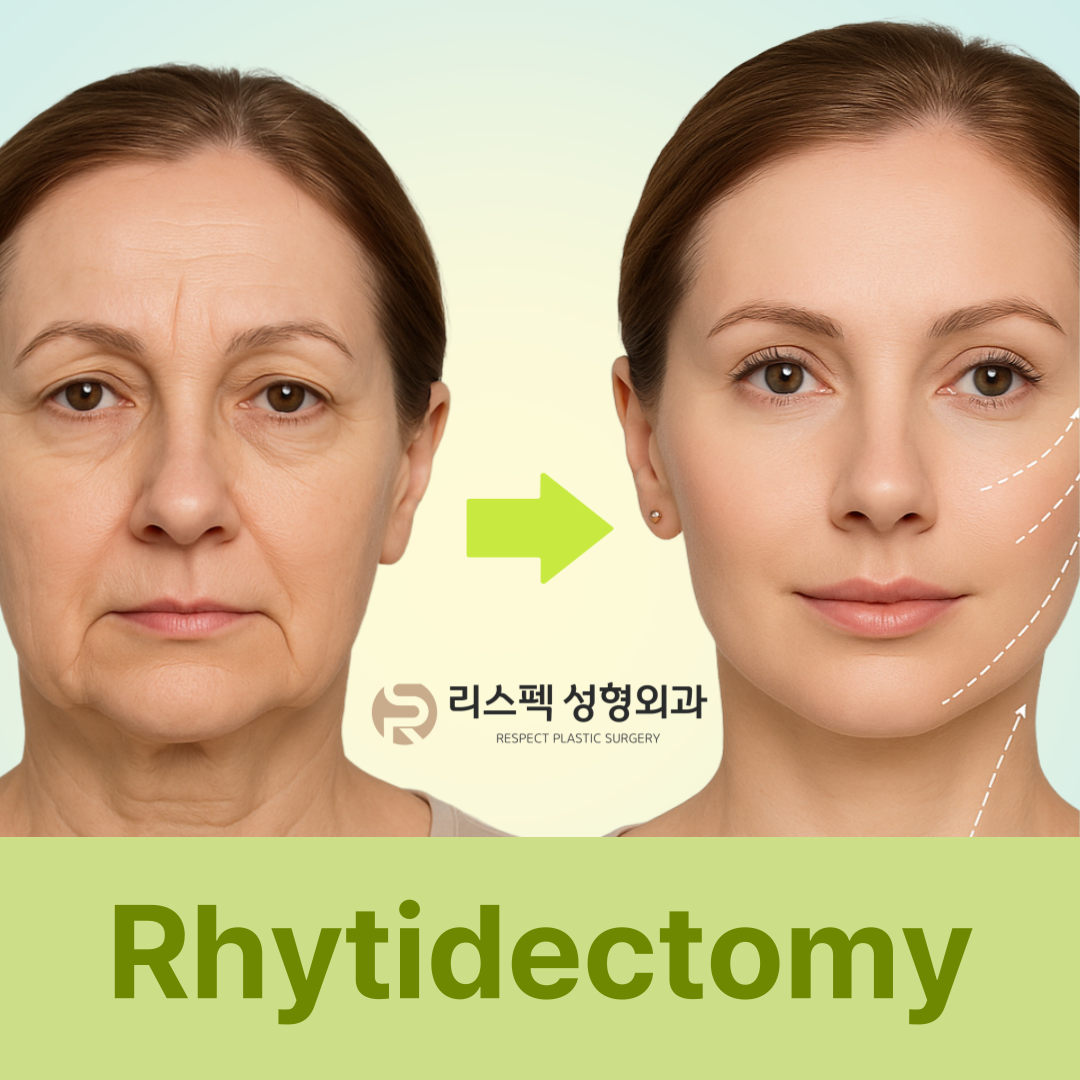
We’d like to introduce facelift surgery today, especially for those noticing signs of aging in the face.
What Happens to the Face as We Age?
As we age, the first noticeable changes often appear in our face.
The jawline becomes less defined, cheek fat sags downward, and wrinkles deepen around the mouth and nasolabial folds.
These signs are a natural part of aging, and while early-stage sagging can be managed with lifting treatments or skincare,
non-surgical options tend to have limitations as sagging progresses.
What Is a Facelift (Rhytidectomy)?
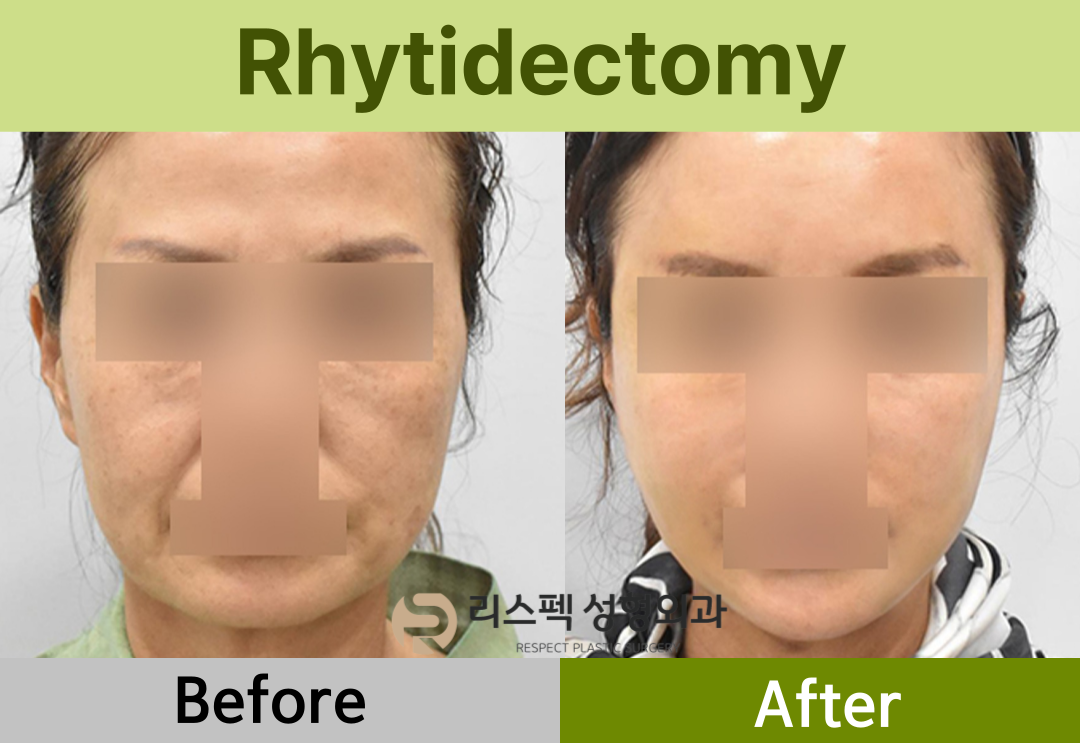
A facelift is not simply about pulling the skin.
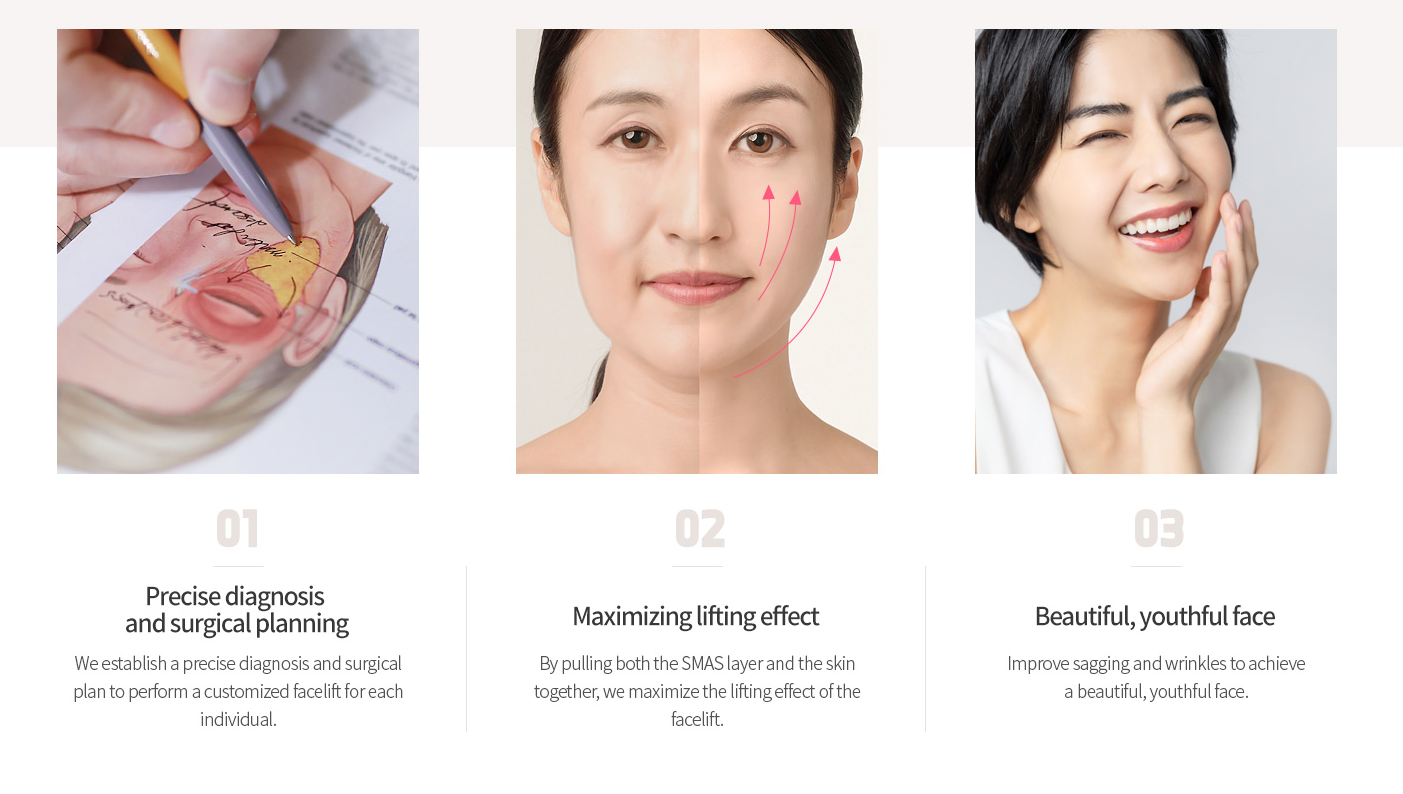
It’s a surgical procedure that lifts not only the outer skin but also the deeper SMAS layer (Superficial Musculo-Aponeurotic System),
which supports facial muscles and soft tissues.
This approach improves sagging cheeks, jawline definition, deep nasolabial folds, marionette lines, and overall facial drooping.
Who Is a Good Candidate for a Facelift?
While most patients are in their 40s to 60s, younger individuals in their 20s or 30s may also be candidates
if they experience facial sagging due to dramatic weight loss or previous contour surgeries.
You may consider a facelift if you:
* Have undergone multiple lifting treatments but are unsatisfied with the results
* Have an overall sagging appearance or tired-looking face
* Have deep nasolabial folds or marionette lines
* Want to restore a clear, youthful jawline
* Feel non-surgical procedures are no longer effective
* Notice significant skin laxity and wrinkles across the face
How Is the Facelift Procedure Performed?
The incision is typically made from the front of the ear to the back.
The surgeon carefully lifts and removes excess skin and secures the underlying SMAS layer for long-lasting support.
This isn’t just about pulling skin—it's a restorative procedure that repositions sagging facial tissues back to their original location.
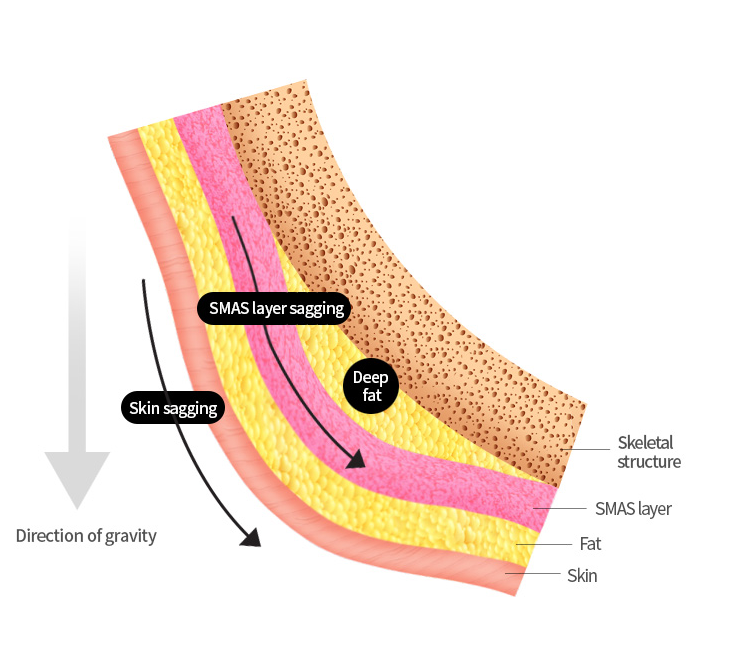
Why Is It Important to Lift the SMAS Layer?
Skin sagging isn't caused by loss of surface elasticity alone.
The deeper SMAS layer also sags due to gravity and aging.
The SMAS is a fibrous layer between the fat and muscle that supports facial movement and expression.
If the SMAS layer is not lifted, results will be temporary and sagging may return quickly.
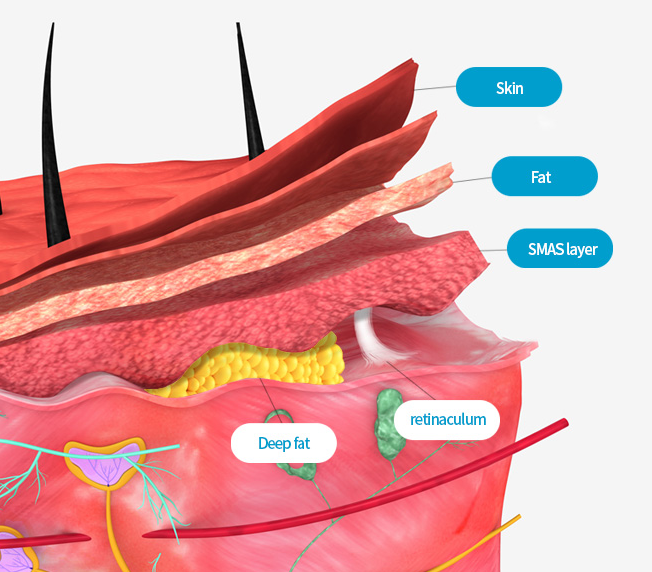
What Is the SMAS Layer?
The SMAS (Superficial Musculo-Aponeurotic System) is located about 4.5mm below the skin.
It plays a critical role in facial definition and firmness.
Laser or HIFU treatments usually can’t reach this layer, which is why facelift surgery is often the most effective option for long-term lifting.

What to Expect After Surgery (Recovery Process)
Recovery time may vary depending on the individual.
However, swelling and bruising typically subside within 1–2 weeks.
* Days 1–3: Apply cold compresses to reduce swelling
* After Day 4: Switch to warm compresses to promote circulation
* Diet: Avoid spicy, salty, or hard-to-chew foods during the initial days
* Restrictions:No alcohol or smoking for at least one month
* Avoid saunas or hot, humid environments
Facelift surgery goes beyond simply tightening the skin.
It restructures sagging tissues and restores a more defined, youthful appearance.
If you are looking for **long-lasting, natural lifting results** and want to restore facial balance and firmness,
a facelift may be the most effective solution.
If you’re looking for a natural, long-lasting facelift result, trust Korea’s top-level surgical team — only at RESPECT Plastic Surgery
● Website http://www.respectpseng.com/
● WhatsApp http://wa.me/821020712316
● Instagram: @respect_plastic_surgery
#FacialAging #FaceSagging #JawlineLoss #WrinklesAndSagging #SignsOfAging #CheekSagging #NasolabialFolds #MidfaceAging #FaceliftBeforeAfter #WhyFacelift


