
Hello, this is Respect Plastic Surgery Clinic ♥️
For those who have concerns about facial contours, today we would like to talk about square jaw reduction surgery and cheekbone reduction surgery.
Facial contours are an important factor that influences the overall impression and image.
Many people worry that a square jaw or prominent cheekbones can make their face look strong or blunt.
To address these concerns, many choose square jaw reduction surgery and cheekbone reduction surgery.
Each surgery helps create a softer and more balanced facial line, completing a sophisticated and natural look.
First, let me explain Respect’s cheekbone reduction surgery.
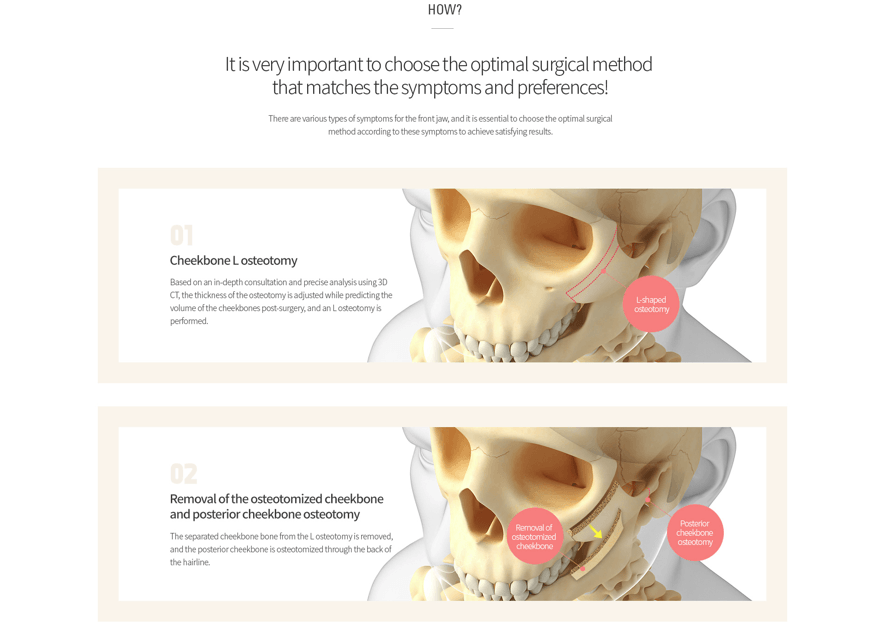
Our clinic performs the surgery using the L-osteotomy method on the cheekbone.
Before surgery, we conduct in-depth consultations and detailed analyses using 3D CT scans to predict the postoperative cheekbone volume in advance and carefully adjust the osteotomy thickness when performing the L-osteotomy.
After that, the separated portion of the cheekbone through L-osteotomy is removed, and an incision behind the sideburn is made to perform an osteotomy on the rear cheekbone as well.
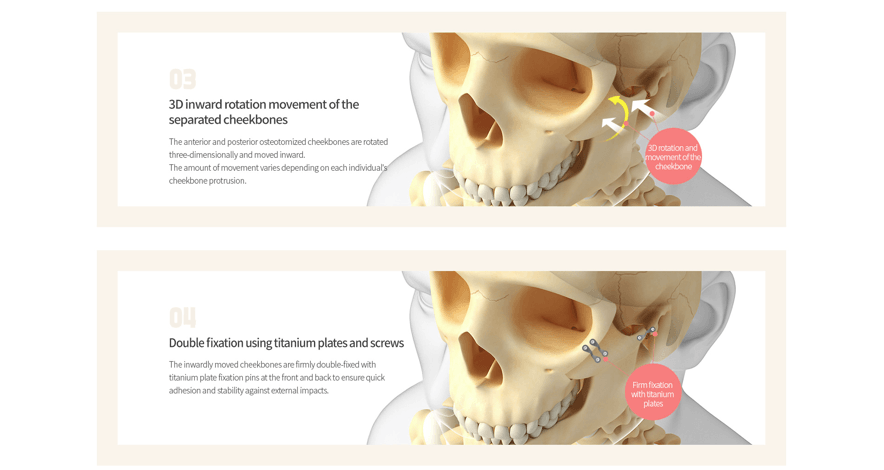
With both the front and rear cheekbones separated, the cheekbone is rotated three-dimensionally and moved inward.
At this time, the amount of movement is individually adjusted depending on the degree of protrusion and the shape of the face, focusing on creating a more natural and balanced facial line.
Next, let me explain Respect’s square jaw reduction surgery.
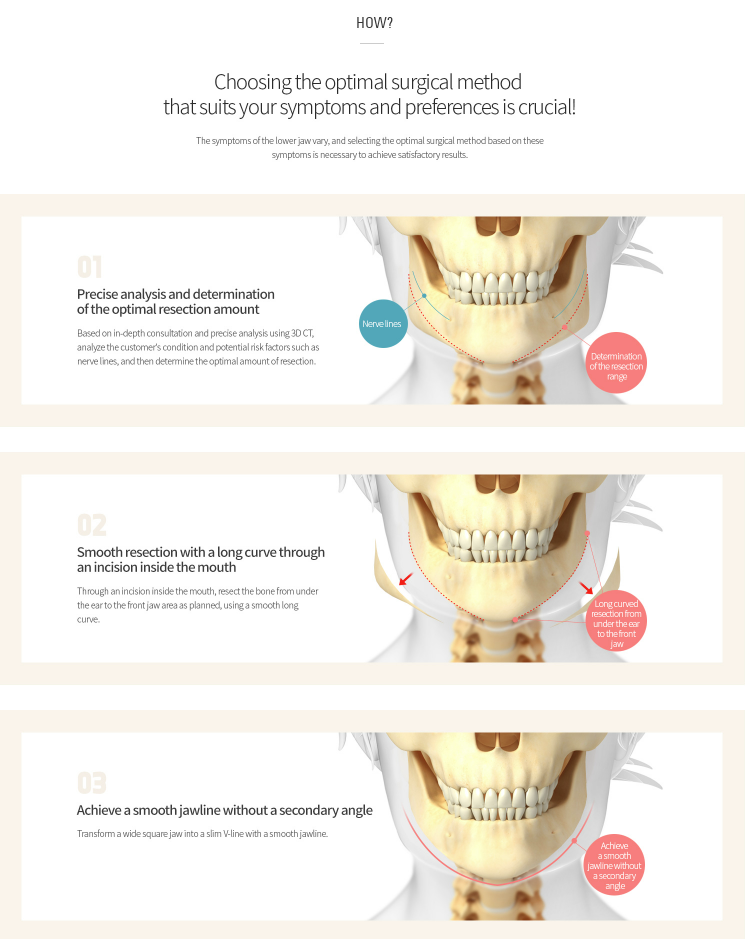
First, based on in-depth consultation and precise analysis with 3D CT, we carefully check the patient’s condition and important risk factors such as nerve lines.
This allows us to plan the optimal amount of bone removal while prioritizing safety.
Then, through an incision inside the mouth,
the bone from the area under the ear (square jaw) to the front jaw area is smoothly shaved along a soft,
long curve according to the planned range.
This transforms a wide and angular square jaw into a naturally slender V-line and completes a smooth jawline.
In fact, many patients come for consultations due to secondary angles (double jaw angles) after previous surgeries.
Preventing this problem and creating a smooth jawline without secondary angles from the first surgery is an important role of the medical staff, and at Respect, we perform surgeries based on precise planning and skilled techniques.
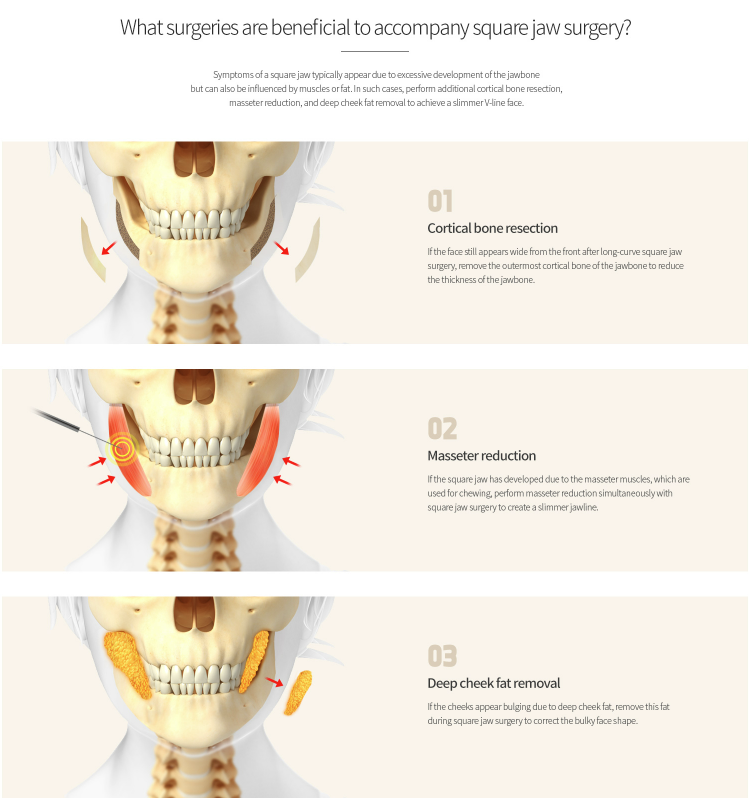
Additional surgeries recommended with square jaw reduction
There are surgeries that can be performed alongside square jaw surgery for even better results: cortical bone shaving, masseter muscle reduction, and deep cheek fat removal.
First, cortical bone shaving is performed when the face still looks wide from the front even after long curved square jaw surgery.
The outer cortical bone, the outermost layer of the jawbone, is carefully shaved to reduce the thickness of the bone, helping to create a slimmer and more three-dimensional facial line.
Masseter muscle reduction is effective when the masseter muscle, which is used for chewing, is enlarged and causes a square jaw appearance.
By combining masseter muscle reduction with square jaw surgery, both the muscle and bone are improved for a more slender and soft jawline.
Lastly, deep cheek fat removal is performed when the cheeks look bulging due to deep cheek fat.
By removing this fat during square jaw surgery, the face shape can be slimmed and refined.Here are the before and after photos of a patient who underwent both cheekbone reduction and square jaw reduction surgery.
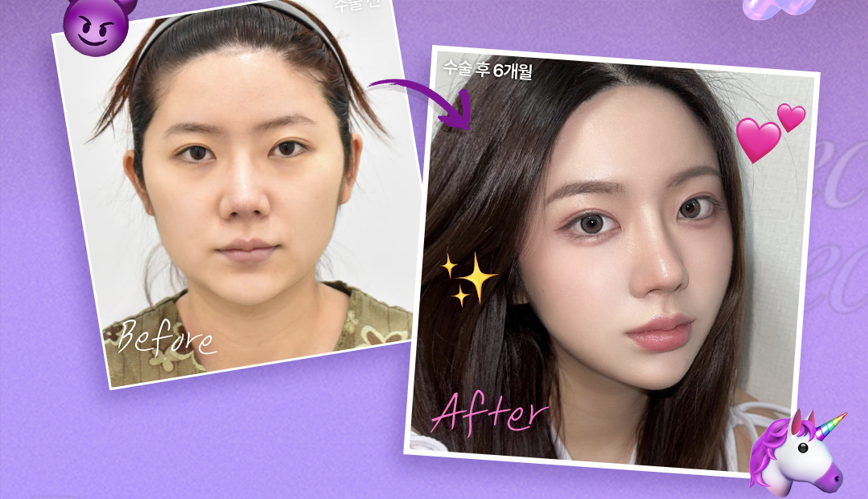
Here are the before and after photos of a patient who underwent both cheekbone reduction and square jaw reduction surgery.
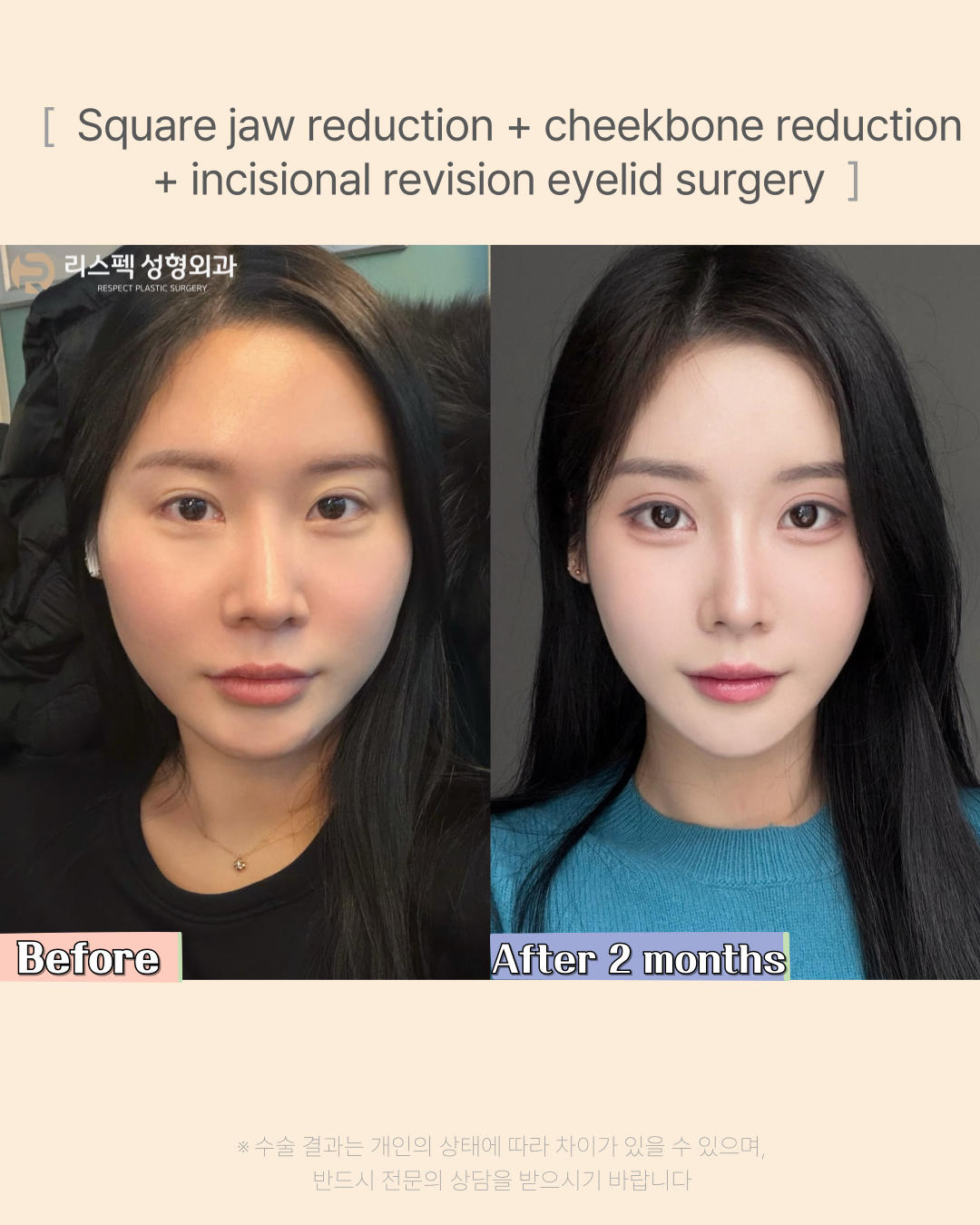
The patient was concerned about a wide and flat facial shape, and since her double eyelid crease was lost, she had incision double eyelid surgery together with the two contouring surgeries.
After surgery, her overall facial lines became more refined, and she often hears that her expression looks softer.
The photos show her appearance two months after surgery, where you can see the cleanly defined facial lines.
Since contouring surgery requires general anesthesia, safety is of utmost importance.
We have an anesthesiology specialist on site to ensure a safe and systematic environment during surgery.
We will continue to bring you more helpful and informative content. Thank you ♥️


